Maryland Gov. Wes Moore has reportedly arrived at a shocking, history-altering realization: sometimes you don’t get invited to things because people don’t think you’re doing a great job.
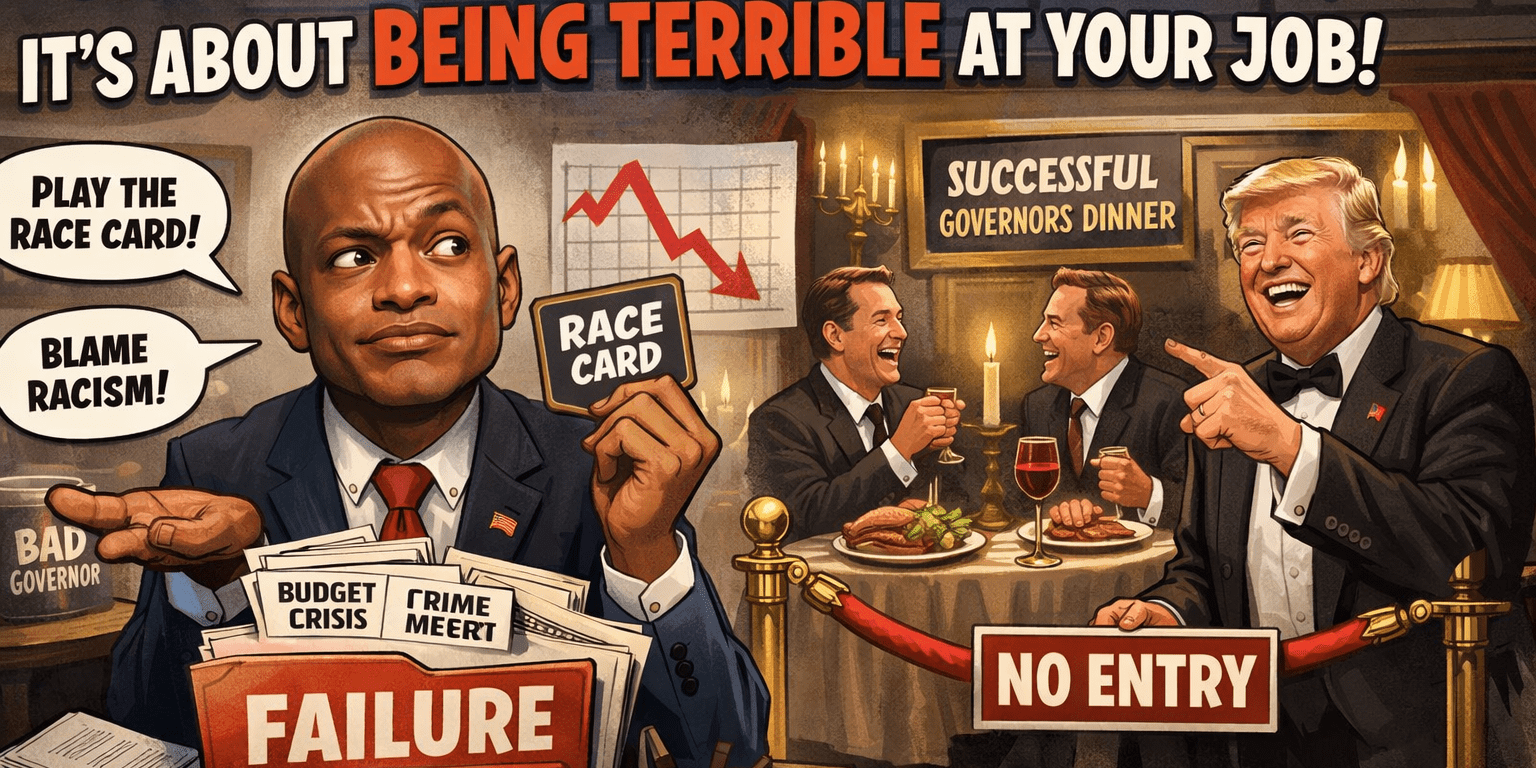
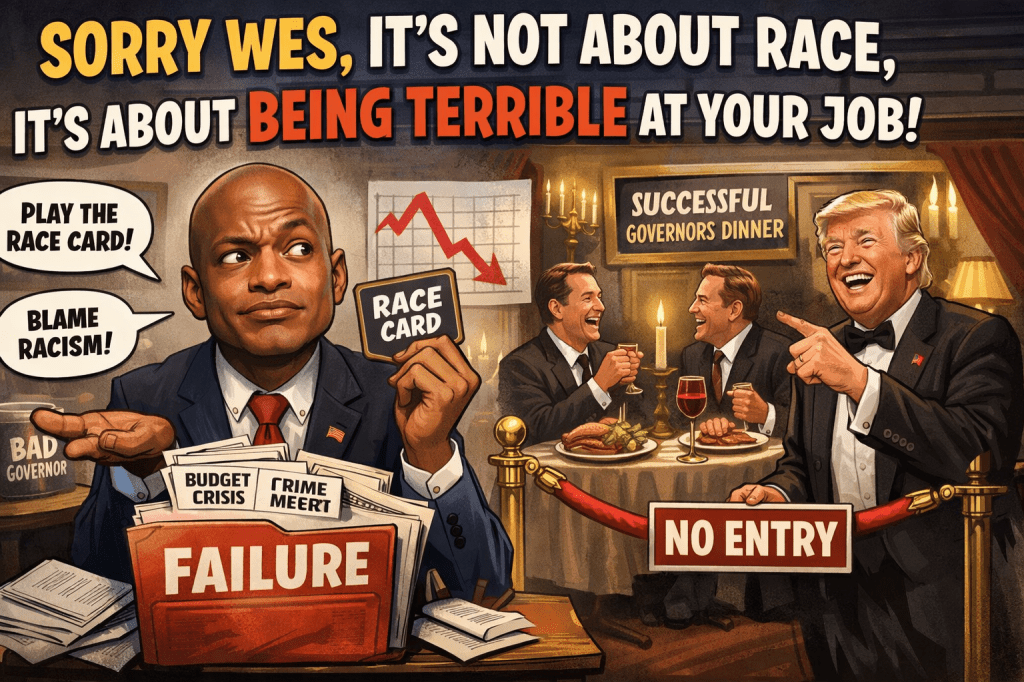
This breakthrough came after Moore noticed he was not on the guest list for a recent governors’ dinner hosted by Donald Trump—an omission that immediately triggered a familiar chorus from political allies and media commentators urging him to “say the quiet part loud” and attribute the snub to racism, structural exclusion, vibes, dog whistles, or an unnamed but deeply menacing force known only as “the undertone.”
But Moore, to his credit, briefly resisted.
Sources close to the governor say Moore considered a radical alternative explanation: maybe the dinner host simply didn’t want to break bread with a governor whose signature achievements include soaring costs of living, a looming budget hole, and a governing style best described as “inspirational TED Talk energy with a side of spreadsheet avoidance.”
This was, by Annapolis standards, a bold moment of self-reflection.
Still, the pressure was intense. Advisors reportedly waved polling memos, Twitter screenshots, and pre-written op-eds urging Moore to “center race,” “own the narrative,” and “never let competence interfere with a good grievance.” The playbook was clear: if you’re not invited, it can’t be because voters are unhappy—it must be because the system is.
Yet Moore hesitated. After all, several other Democratic governors—some equally diverse, some aggressively beige—also failed to receive invitations. A troubling data point, since it suggested the dinner was not a Klan rally disguised as a steakhouse.
Insiders say Moore briefly floated another hypothesis: that Trump’s guest list may have prioritized governors who either (a) support his policies, (b) run their states without constant fiscal drama, or (c) can complete a sentence without invoking their personal biography as a governing credential.
This theory did not test well with the consultant class.
Ultimately, Moore settled on a careful middle ground. While allies continued to imply that race was definitely a factor—just, you know, in a very sophisticated, impossible-to-prove way—Moore himself suggested that maybe, possibly, the snub had something to do with performance. Not race. Not history. Not symbolism. Performance.
Political observers immediately classified this as “growth.”
Of course, the moment may not last. Maryland’s next budget forecast, transit meltdown, or crime report could easily send everyone scrambling back to the safest narrative available. Accountability is exhausting. Identity is renewable.
Still, for one fleeting news cycle, Maryland residents were treated to something rare in modern politics: a governor flirting with the idea that invitations are earned, not owed—and that leadership is judged less by who you are, and more by what you deliver.
No dinner required.
Keep Political Party Animals Free
Political Party Animals exists to laugh at politics so we don’t cry about it. Satire, parody, and absurdity are how we call out hypocrisy, nonsense, and the occasional clown show in public life.
If this piece made you laugh, groan, or say “yep, that tracks,” reader support helps keep the satire sharp and independent.

 Political Party Animals