Once upon a time, the sound of a rape whistle meant one thing: stop what you’re doing—someone needs help. It was sharp, unmistakable, and universally understood as an alarm of last resort.
Fast-forward to 2026, where that same sound increasingly means:
“Someone with a ring light is livestreaming themselves chasing a government employee.”
Progress.
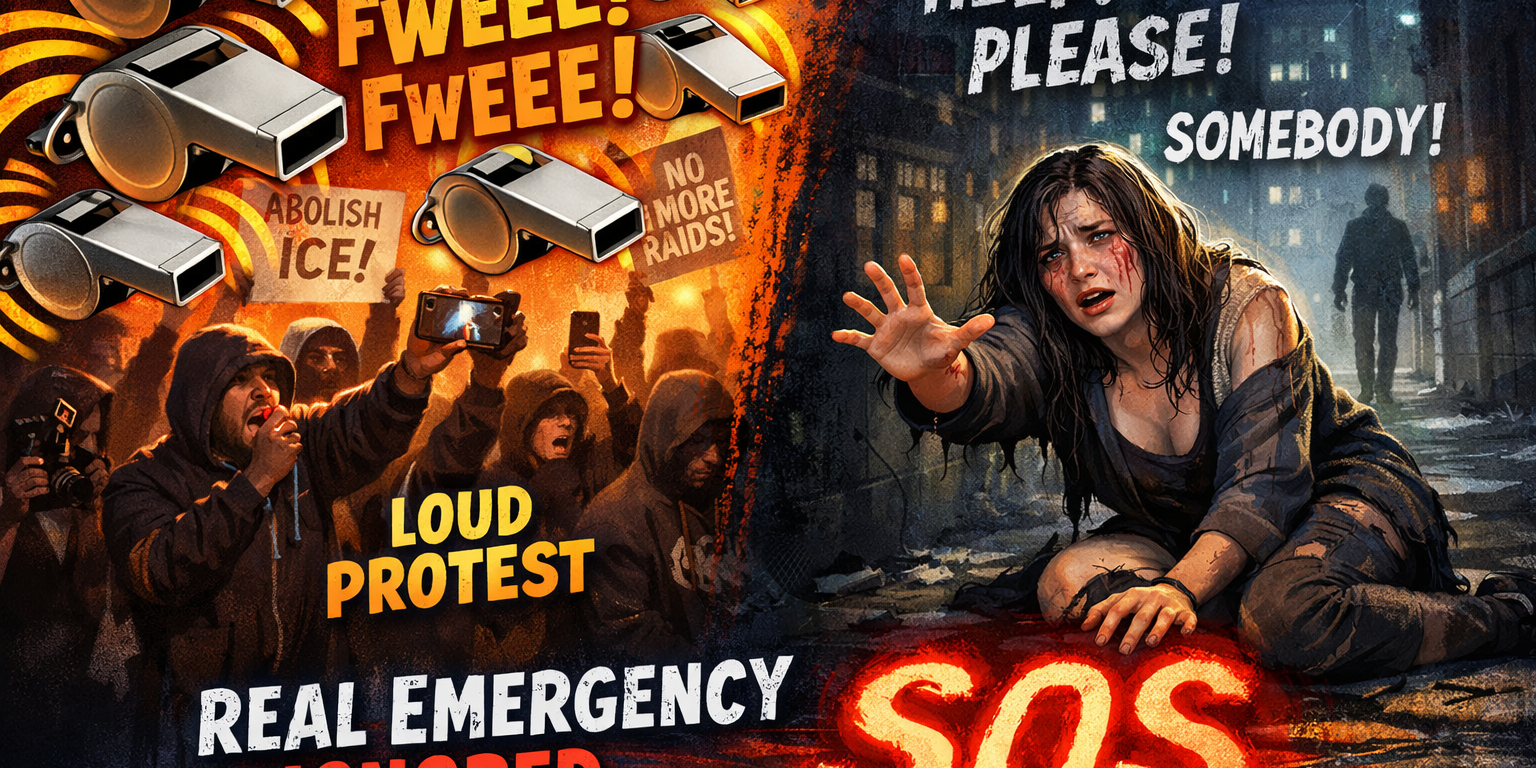
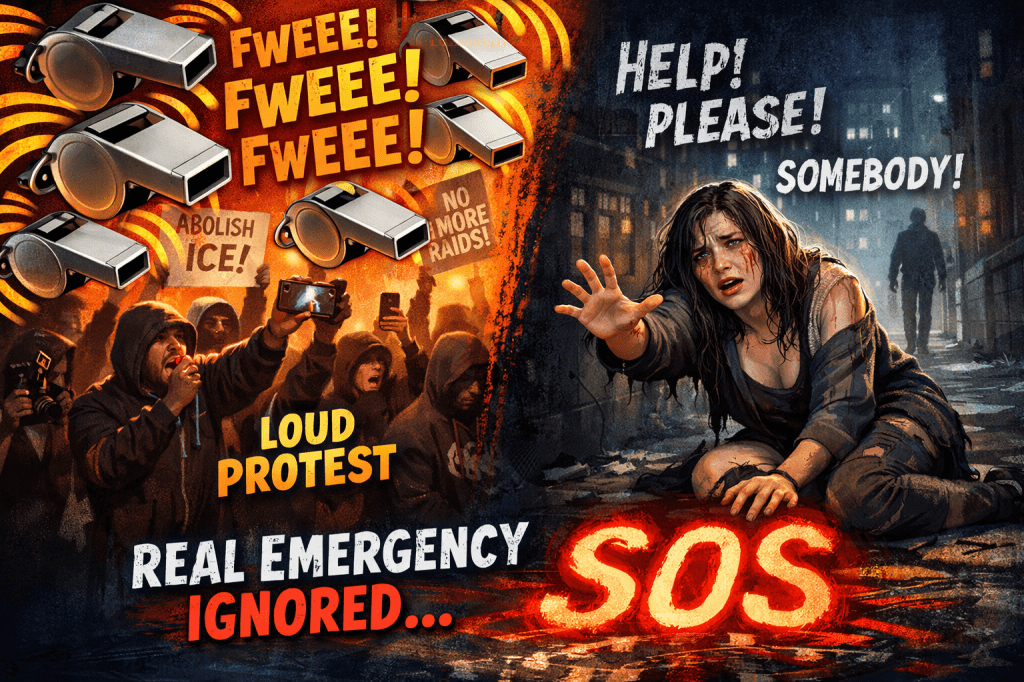
Across major cities, left-wing activists have enthusiastically repurposed rape whistles as protest props—blowing them in coordinated swarms while tailing U.S. Immigration and Customs Enforcement agents, chanting slogans, and demanding that everyone within earshot treat bureaucratic inconvenience as a five-alarm emergency.
The result? The emergency signal has been demoted to ambient noise.
Cry Wolf, but Make It Activism™
Public safety experts warn about “alarm fatigue”—when warnings are used so often and so indiscriminately that people stop reacting. Fire alarms ignored in dorms. Car alarms dismissed in parking lots.
Now, rape whistles are joining the club.
In some neighborhoods, residents no longer rush to windows or phones when they hear the piercing shriek. They pause. They listen. They ask themselves the modern question:
“Is someone in danger… or is this another protest with matching hoodies?”
That split second of doubt is exactly what rape whistles were invented to eliminate.
From Survivor Tool to Performance Art
The irony is thick enough to require ear protection.
The same political movements that insist survivors must always be believed have managed to turn one of the most visceral symbols of victimhood into a reusable protest accessory. The whistle—designed for moments of isolation, fear, and real danger—is now part of a tactical kit, right between the bullhorn and the QR-code donation link.
At this point, it’s only a matter of time before someone prints merch:
“Rape Whistles for Bureaucratic Discomfort.”
The People Who Don’t Get a Megaphone
The activists will go home. The livestreams will end. The clips will circulate. The dopamine will fade.
But the survivors who actually need that whistle don’t get a rebrand.
They’re the ones who now have to wonder:
- Will anyone take this sound seriously anymore?
- Will bystanders assume I’m part of a demonstration?
- Will someone roll their eyes instead of calling for help?
Nothing says “believe survivors” quite like conditioning the public to ignore the sound they rely on.
When Protest Eats Its Own Symbols
No one is arguing that people can’t protest immigration policy. They can—and do.
The problem is cultural vandalism: stripping life-saving symbols of their meaning until they’re just another noisemaker in the outrage parade.
If everything is framed as violence, if every whistle is blown for politics, then real violence gets lost in the static.
And when that happens, the price of crying wolf isn’t paid by activists, politicians, or Twitter.
It’s paid by the one person who blows the whistle and finally needs someone—anyone—to listen.

 Political Party Animals