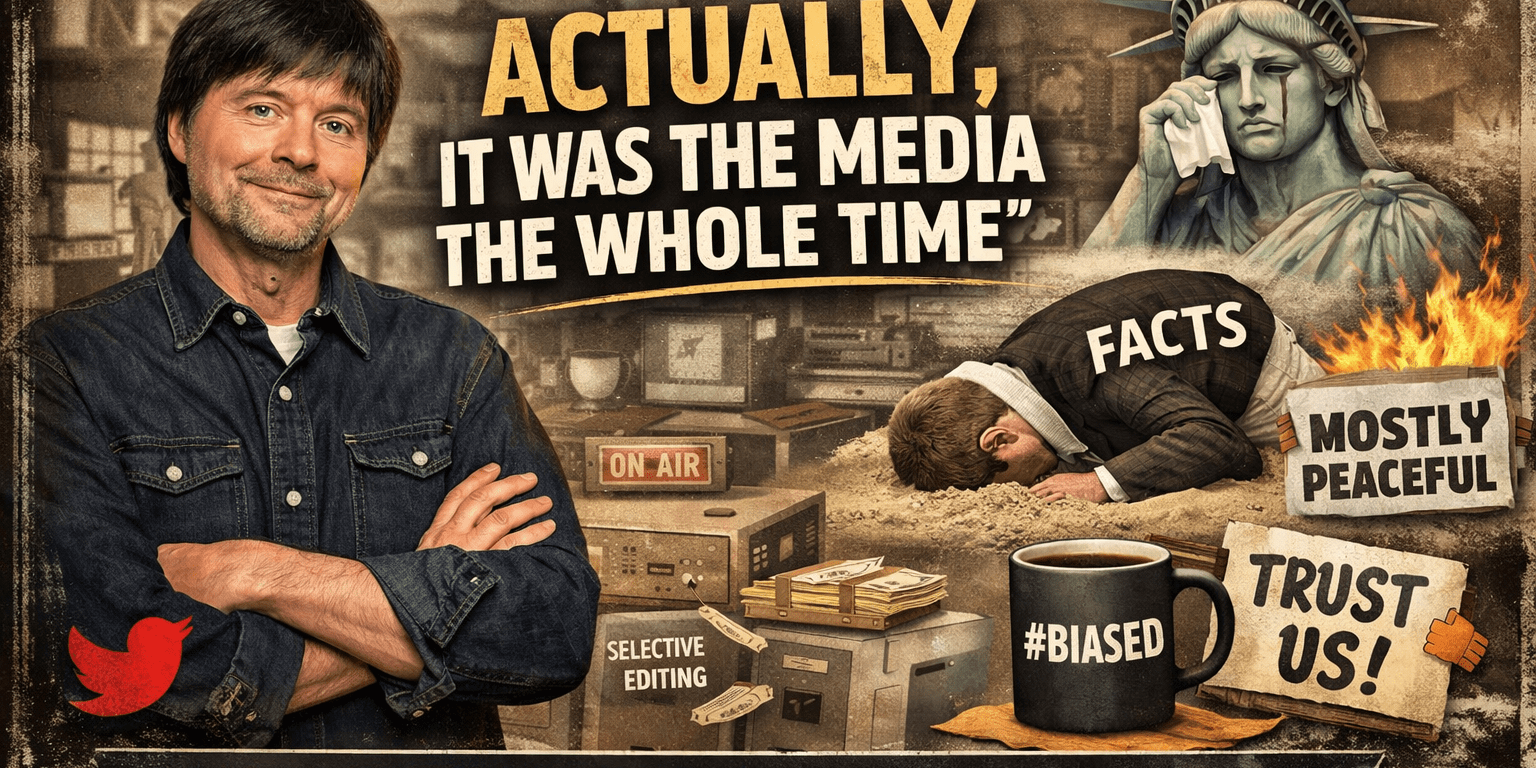
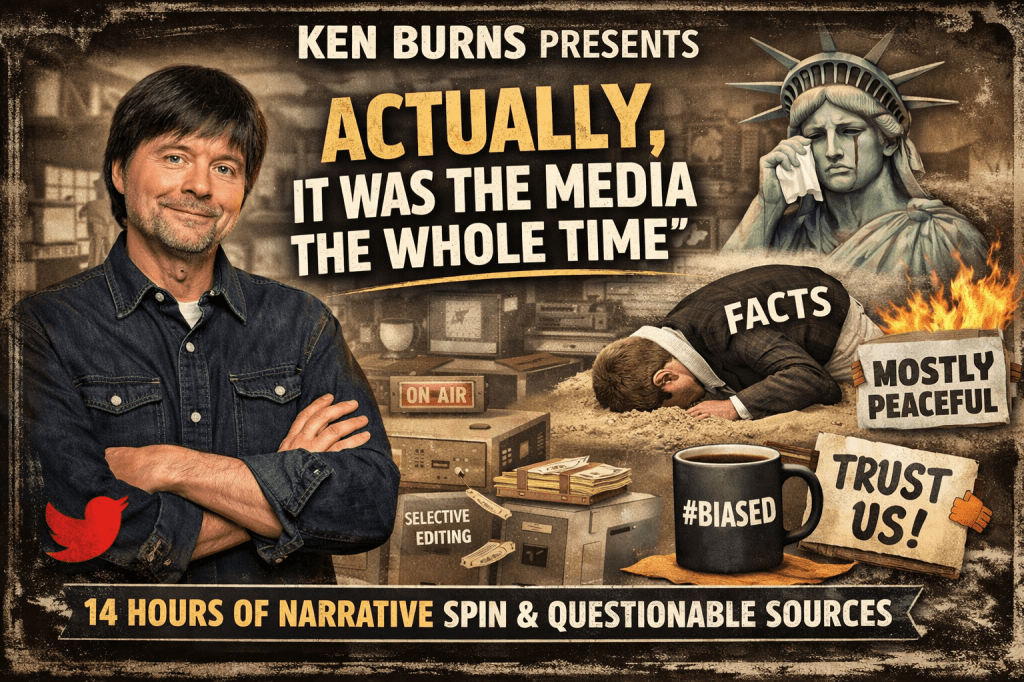
In a stunning development that sent tote bags tumbling off the shelves of public radio pledge drives nationwide, Ken Burns announced this week that he is working on a new documentary series examining left-wing bias, coordinated fraud, and ideological influence inside mainstream media.
The project—tentatively titled “Bias: A Very Long Story, Told Slowly”—will reportedly span 14 hours, feature sepia-toned screenshots of tweets, and include soft violin music played over awkward silence as journalists stare into the middle distance, wondering how this all got so out of hand.
“I didn’t set out to do this,” Burns said solemnly, seated in front of a slowly panning photograph of a 1997 newsroom. “But at some point, the evidence just… dissolved into the frame.”
Episode One: “Once Upon a Narrative”
The opening episode traces the early days of American journalism, back when reporters allegedly asked questions, checked facts, and occasionally offended people on both sides.
Viewers will watch black-and-white footage of editors murmuring phrases like “verify that” and “are we sure?”—phrases now believed to be extinct.
A narrator will explain, in Burns’ signature whisper:
“It was a time before ‘sources say,’ before ‘experts agree,’ before the headline was written before the article.”
Episode Three: “The Rise of the Approved Opinion”
This chapter explores how dissenting views gradually migrated from “debate” to “dangerous misinformation” in under a decade.
Archival material includes:
- A montage of identical headlines published simultaneously across dozens of outlets
- Panels of experts who all attended the same three universities
- A slow zoom on a newsroom Slack message reading: “We’re going with the narrative.”
Burns reportedly spent six months deciding whether to pan left or right on that last screenshot.
Episode Six: “Fraud, But Make It Compassionate”
Perhaps the most controversial installment, this episode examines how large-scale fraud allegations—from nonprofit funding schemes to public-sector spending—were carefully reframed as “administrative errors,” “equity miscalculations,” or “attacks on democracy itself.”
At one point, the camera lingers on a pie chart labeled “Billions of Dollars” as it gently fades into the phrase “No Evidence of Widespread Anything.”
A former producer, speaking anonymously, says the music swells whenever accountability is almost mentioned—then cuts abruptly.
Episode Nine: “The Media Discovers Violence”
This episode documents how certain protests were described as “mostly peaceful” while buildings burned helpfully just outside the frame.
Burns uses a split-screen technique:
- On the left: anchors urging calm and understanding
- On the right: footage they insist viewers are not seeing
The effect is described by early testers as “unsettling” and “not something normally shown during pledge week.”
Episode Twelve: “Silence Is Editorial Policy”
Here, the series confronts stories that simply… disappeared.
Whistleblowers no longer booked.
Scandals politely ignored.
Corrections issued at 2:17 a.m. on a holiday weekend.
Burns reportedly considered calling this episode “We Meant to Get to It” but decided that would be too on-the-nose.
The Finale: “And Still, They Trusted Us”
The final episode reflects on the American public—how trust eroded, skepticism grew, and people began committing the unthinkable act of checking multiple sources.
The documentary closes with a long pan across an empty newsroom, the hum of unused editing bays, and a final line delivered in classic Burns fashion:
“They did not lose the audience all at once.
They lost them… slowly.”
Early Reactions
Public television executives insist the documentary is “nonpartisan,” “nuanced,” and “absolutely not what donors were expecting.”
Meanwhile, several media critics have preemptively reviewed the series without watching it, declaring it “dangerous,” “problematic,” and “deeply concerning”—a phrase Burns thoughtfully includes in the end credits.
Coming Soon to Your Local PBS Station
Right after Antiques Roadshow
Right before the apology fundraiser
Viewer discretion advised.
Critical thinking strongly encouraged.

 Political Party Animals