
ANNAPOLIS, MD — As champagne corks popped and the clock struck midnight, Marylanders across the state made a rare, bipartisan show of unity: they refused to make New Year’s resolutions.
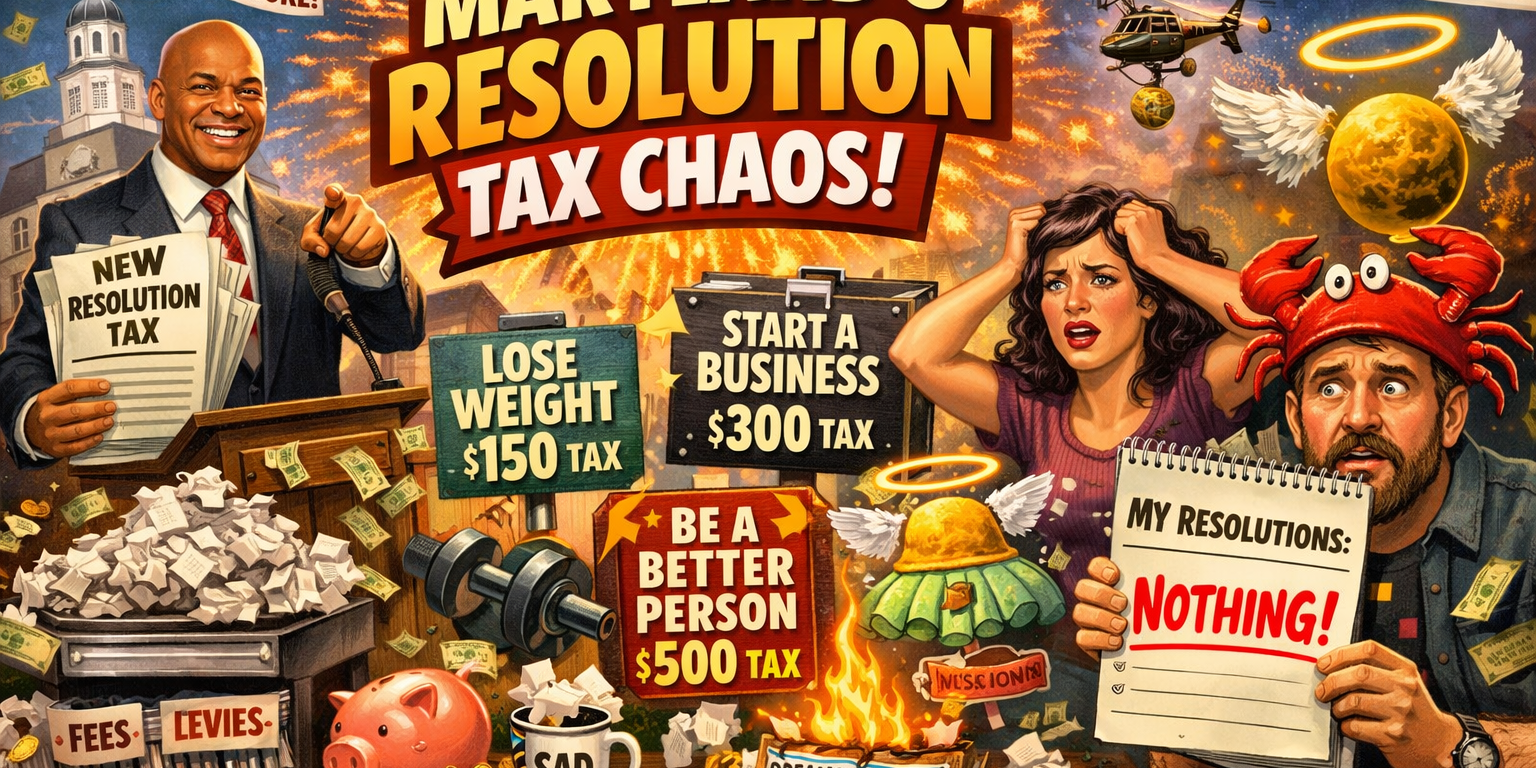
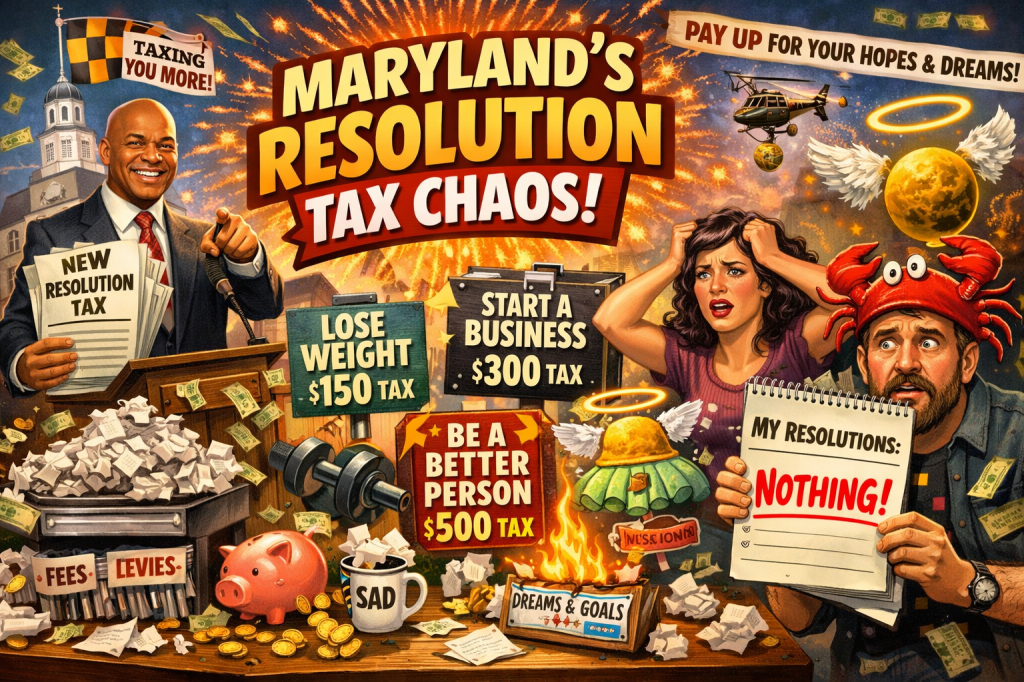
The reason, according to widely circulated and absolutely-not-denied rumors, is that Wes Moore is exploring a bold new fiscal strategy to address Maryland’s looming budget deficit—taxing residents per resolution.
“I was going to resolve to exercise more,” said Towson resident Mark Feldman, carefully shredding a Post-it note labeled ‘Gym?’ “But then I remembered this is Maryland. Next thing you know, I’d owe $29.95 per squat plus a convenience fee.”
A Progressive Tax on Personal Growth
Under the rumored proposal—internally referred to as “The Self-Improvement Responsibility Act”—residents would be assessed fees based on the quantity and ambition of their resolutions.
Leaked draft categories reportedly include:
- $50 flat tax for basic resolutions (“drink more water,” “read a book”)
- $150 surcharge for fitness-related goals (“lose weight,” “run a 5K”)
- $300 ambition premium for career moves (“ask for a raise,” “start a business”)
- $500 environmental impact fee for vague goals like “be a better person”
- Variable rate for “manifesting abundance,” adjusted quarterly for inflation
State officials insist the plan is “forward-thinking” and “values-based.”
“Why should only income be taxed?” asked one anonymous budget aide. “Growth is a resource too.”
Deficit So Big It Needs a Vision Board
Maryland’s budget shortfall has reportedly grown so large that traditional fixes—spending cuts, program audits, or fiscal restraint—were deemed “emotionally regressive.”
Instead, the administration is said to favor micro-taxes on optimism, a renewable resource believed to regenerate every January 1.
“This isn’t about punishment,” another aide explained. “It’s about shared sacrifice. If you believe in yourself, you should believe in paying for it.”
Citizens Adapt Quickly
Residents responded with ingenuity:
- One Montgomery County family filed a joint ‘No Change’ declaration
- Baltimore locals reported switching to “vibes-only goals”
- Several Eastern Shore residents claimed they resolved to maintain current levels of disappointment, citing tax exemptions for consistency
“I told my kids our resolution is to survive,” said a Prince George’s County mother. “Apparently that’s still taxable, but at least it caps out.”
Moore Denies Nothing, Confirms Everything Adjacent
The Governor’s office has officially denied the existence of a Resolution Tax—while confirming the state is “exploring innovative revenue streams tied to civic engagement.”
When asked directly whether personal goals could be taxed, a spokesperson replied:
“We encourage Marylanders to set intentions responsibly.”
Markets reacted nervously. Local stationery stores reported a 90% drop in resolution journals, offset by a surge in sales of blank notebooks labeled “Notes for Legal Counsel.”
Looking Ahead
As 2026 begins, Marylanders are cautiously optimistic—quietly, internally, and without documentation.
Experts predict next year’s trend will be “silent personal development”, followed closely by “growth under the table.”
In the meantime, state leaders are rumored to be considering a pilot program taxing hopes, dreams, and vague plans to ‘do better this time.’
Residents are advised to think carefully before improving themselves.

 Political Party Animals