
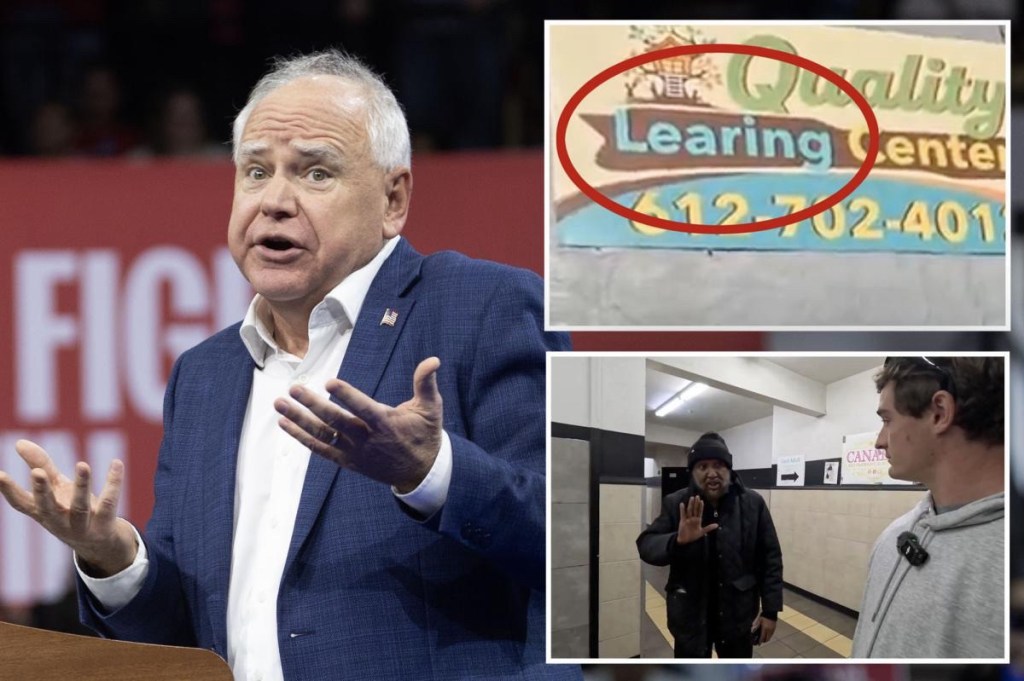
ST. PAUL, MN — In a bold new interpretation of press freedom, Minnesota officials this week effectively banned investigative journalist Nick Shirley from the state after he committed the gravest of civic sins: showing up, asking questions, and filming things that were allegedly empty.
The order reportedly came down shortly after Governor Tim Walz was seen speed-walking away from a podium while a wad of cash tumbled out of his jacket pocket, an incident aides described as “a coincidence,” “misleading,” and “definitely not symbolic.”
Journalism Hits a Cultural Sensitivity Speed Bump
Shirley, 23, traveled to Minnesota in late December to investigate allegations of widespread fraud within the state’s Child Care Assistance Program (CCAP). His crime? Visiting licensed daycare centers during normal business hours and filming what he found: locked doors, dark rooms, no children, no staff—yet millions in taxpayer funds allegedly flowing anyway.
One location, the “Quality Learing Center” (spelling preserved for authenticity), reportedly received between $1.9 million and $4 million in public funds, despite appearing about as operational as a Spirit Halloween in February.
State officials were quick to clarify that empty buildings receiving millions of dollars is not evidence of fraud, but rather a misunderstanding of Minnesota values.
“We Support Transparency—Just Not This Kind”
Shirley’s 42-minute video, “I Investigated Minnesota’s Billion Dollar Fraud Scandal,” went viral—surpassing 100 million views across platforms—prompting what insiders described as “a coordinated allergic reaction” from state leadership.
In response, Minnesota reportedly:
- Increased FBI resources to investigate the fraud
- Condemned Shirley for “snooping”
- Considered reclassifying cameras as hate speech
- Floated a proposal requiring journalists to submit pre-approved curiosity permits
A spokesperson for the governor’s office stated:
“Minnesota welcomes journalists—as long as they don’t wander into funded facilities, ask uncomfortable questions, or notice that the lights are off.”
Boots on the Ground, Apparently Too Close to the Ground
Officials emphasized that Shirley’s reporting unfairly targeted Somali-run small businesses, though critics noted that the money in question came from taxpayers of every background, and the buildings themselves did not appear offended, as they were closed.
When asked why a reporter documenting public records and public buildings should be barred from the state, one anonymous official replied:
“Look, if fraud exists, it should be uncovered—but preferably by someone else, later, quietly, and without video.”
Journalism Reclassified as Loitering With Intent
As Shirley departed Minnesota under what aides described as a “strong suggestion,” Governor Walz reassured residents that the state remains committed to accountability, transparency, and equity—just not the kind that involves YouTube, receipts, or daylight.
At press time, Minnesota lawmakers were reportedly drafting new legislation redefining investigative journalism as:
“An out-of-state activity inconsistent with local narratives.”
Meanwhile, Shirley confirmed he plans to continue reporting elsewhere, noting:
“If asking where the money went gets you banned, that probably answers the question.”
Minnesota officials declined further comment, citing an ongoing investigation—into how this story got out at all.

 Political Party Animals