A Christmas Tail
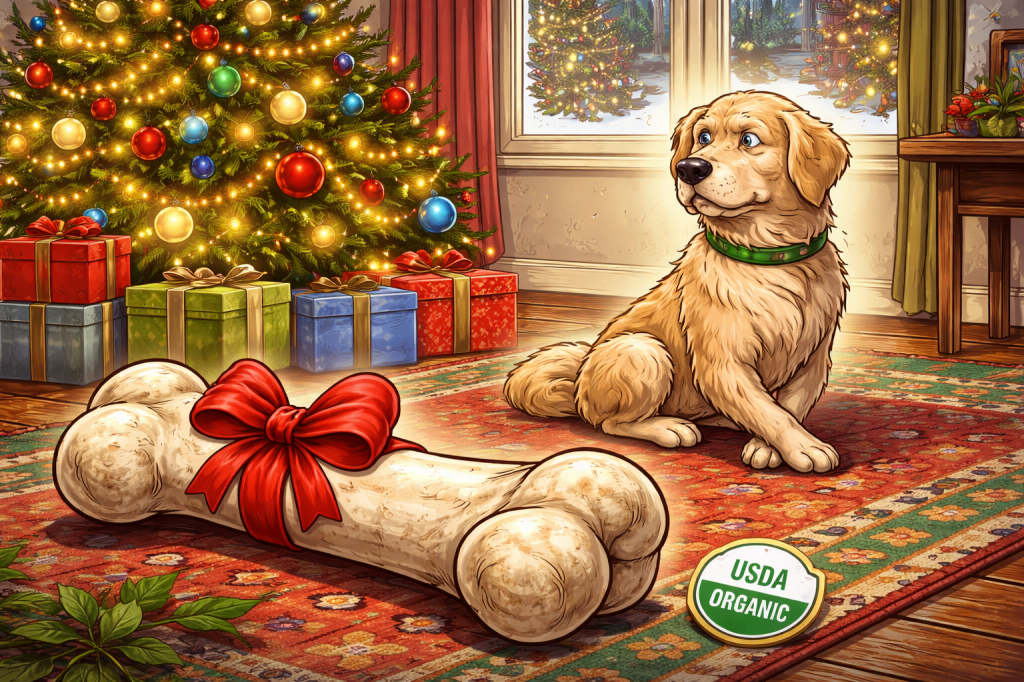
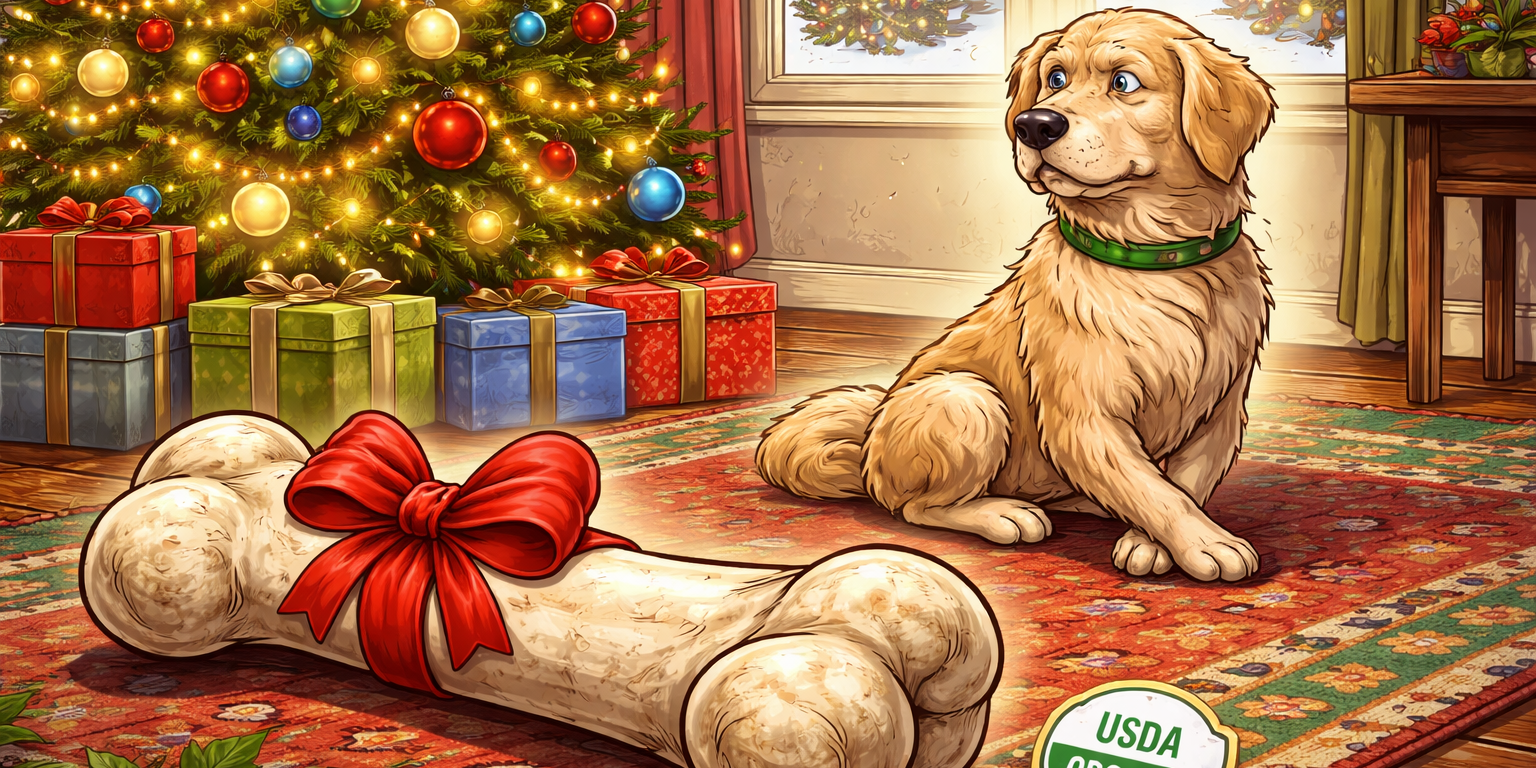
The dog stared at the bone.
It was enormous. Regal. Possibly the largest bone ever wrapped in a festive bow. It had been dragged into the living room with great effort, thumped onto the rug, and presented with the kind of pride usually reserved for graduating children or tax refunds.
And yet the dog did not move.
He sniffed once.
Then again, longer this time.
Then he sighed.
No wag. No gnaw. No slobber.
Instead, he sat down, crossed his front paws, and looked away—toward the window, where the world was cold, unjust, and insufficiently curated.
“This,” the dog seemed to say, “is problematic.”
The humans waited.
The dog leaned in again, nose hovering just above the bone’s surface. His nostrils flared. He recoiled.
Processed.
Highly processed.
The dog had standards now.
Years earlier, he would have demolished this bone in minutes—white shards everywhere, marrow smeared across the couch, joy radiating from every canine pore. But those were simpler times. Before the enlightenment. Before the labels. Before the blogs.
This dog had been raised on messages.
He had learned that not all bones were created equal.
That some bones were sourced ethically, while others came from morally ambiguous livestock situations.
That mass production was violence.
That preservatives were basically colonialism.
He had watched documentaries.
He had overheard podcasts.
He had absorbed conversations about sustainability, transparency, and “doing better.”
Now here he was, staring at a bone that had clearly come from some faceless industrial pipeline—shipped, sanitized, shrink-wrapped, and stripped of its soul.
The dog looked up at his owners with disappointment, not anger. Anger was too reactionary. Disappointment was educational.
Was this grass-fed?
Was this free-range?
Had the cow consented?
No answers were forthcoming.
The dog exhaled sharply through his nose and pushed the bone away with one paw.
Free handouts, he had learned, were not enough anymore.
Free handouts needed to be thoughtful.
They needed to align with his values.
They needed to meet his expectations.
They needed to be artisanal.
He would consider a smaller bone, perhaps. One locally sourced. Possibly air-dried. Definitely organic. Ideally with a handwritten tag explaining its journey.
The humans tried encouragement.
“Go on,” one said.
“It’s a treat,” said another.
The dog looked offended.
A treat without certification? Without provenance? Without a QR code linking to a mission statement?
Absolutely not.
He turned his back on the bone completely and padded toward his bowl, where a half-eaten meal of ethically questionable kibble waited. He sniffed that too, frowned internally, and walked away again.
Christmas, it seemed, had failed to meet his standards.
As the bone sat untouched, drying slowly on the rug, the dog curled up on his bed, content in his refusal. He hadn’t eaten, but he had stood for something.
And that, he believed, was nourishment enough.

 Political Party Animals